Showing posts with label Joan Crawford. Show all posts

Thursday, October 1, 2009

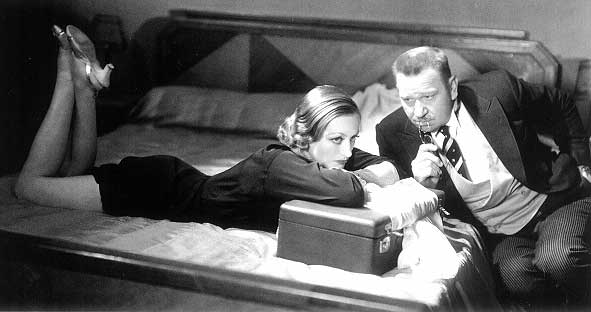
Grand Hotel (1932)

A Star-Studded cast perform in this melodrama that chronicles the lives of various guests at the famous Grand Hotel in Germany as they interact, fight, and fall in love.

Plot-wise, the film is essentially divided between the stories of these guests, which eventually merge with other stories and take on new stories and so on and so forth. We have Greta Garbo as The Dancer (her real name is kinda weird, and she's listed under both titles in the credits), a depressed, eccentric ballerina who wants to be both alone and in love. Joan Crawford is Flaemmchen, a stenographer for wealthy business man Preysing (Wallace Beery). Lionel Barrymore is Otto Kringelein, a dying man who is having his last hurrah with his life savings, and John Barrymore is The Baron, a down on his luck nobleman who must resort to some drastic measures to pay off his debts. The "main" plot (if there really is one) is the emerging love triangle between both The Baron, The Dancer, and Flaemmchen.

The acting for the most part, is pretty good. Joan Crawford is actually really likable and natural here, which serves as an odd counterpoint for Greta Garbo's performance. Now, I'm not bashing a legend here, but her performance is just so odd, in a sense. She successfully conveys the necessary emotion, so it's not a bad performance, just an odd one. She does a lot of grabbing her hair and wrinkling up her face and acting pretty tired most of the film. Granted, she's a suicidal ballerina, so that's a license to be out there. John Barrymore is charming and romantic, and it's very understandable why the two women would fall for him. Wallace Beery is essentially a brute, which is exactly what he's supposed to be, and Lionel Barrymore is so tragic and heartbreaking as someone who has been downtrodden their entire life only to still be treated poorly on his final stab at life.

The film is a great melodrama (it won Best Picture), well-made with wonderful sets and costumes, and as I mentioned, the acting is on a high level. It's also surprisingly sad in a lot of ways, but everything works out in a way that makes sense.

It's pretty easy to recommend this movie, especially given its classic status. Plus, it's got a great cast, and could be a great entry-level film into getting into Greta Garbos filmography, or Joan Crawford, or either of the Barrymores. So, watch it, it's a good little film.

Sunday, August 30, 2009

Mildred Pierce (1945)

Joan Crawford stars in a rags-to-riches tale of a woman whose obsessive love for her daughter leads to her downfall.

Crawford plays Mildred Pierce a woman who is taken into questioning about the murder of her second husband. What unfolds is a series of flashbacks that tells us what brought Mildred to this point in her life, starting out as a married woman who divorces her husband who then has to work in order to support her two daughters. When one daughter dies, Mildred becomes obsessed with her eldest daughter Veda (Ann Blyth) and making her happy devoting her time and new found money from the opening of her own restauraunt to pleasing her spoiled, horrible daughter, leading to a tragic conclusion.

The cast in the film is uniformly good, with Joan Crawford creating a character that we root for, pity, and sometimes want to slap for being so dumb. She's an everywoman who is able to use her skills of observation and intelligence to seize opportunities and use them to further herself and her daughters. Crawford won the Oscar for this role, and it's hard to argue that she didn't deserve it. She creates a strong, intelligent character, but pulls no punches when it comes to her love of Veda, showing it as unhealthy and obsessive.

Ann Blyth also deserves a mention for going completely and totally into making a nasty, horrible character. Veda is spoiled, selfish, and manipulative, using her mother's resources for her own gain, and Blyth doesn't even attempt to make her likable, which is a great feat she was a teenager when she made the film, so be so into the character that sympathy goes right out the window.

The choice of making the film primarily consist of flashbacks works to great effect. Much like A Woman's Face it allows for our perceptions of the characters to shift and change as we see what occured in their past as well as offering various twists as to who actually committed the murder, even though it eventually becomes pretty obvious by the end.

The film is an interesting entry into the film noir genre, considering it focuses on a woman and her rise and fall, in addition to the flashback nature of the film and it's lack of a real "villain", but it's a great film nonetheless. While Joan Crawford has deliver better performances before, she shines in a role that allows for complexity and depth.

It's definately worth watching.

Friday, June 19, 2009

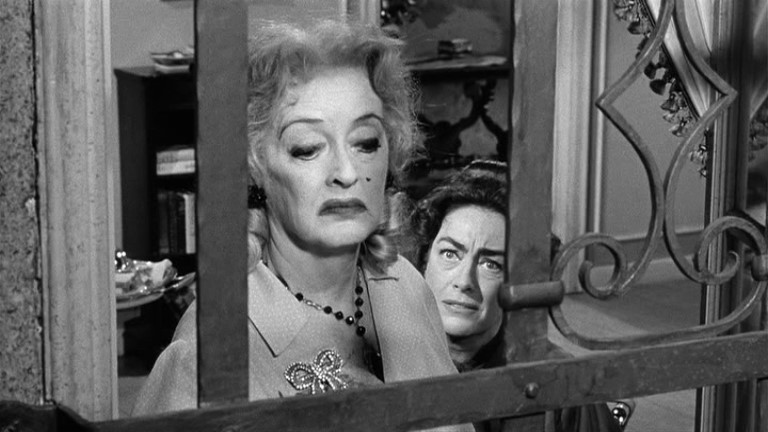
Whatever Happened to Baby Jane (1962)

Bette Davis and Joan Crawford are brought together for what should be considered the Holy Grail for fans of Classic Hollywood Catfights and B*tchery.

Bette Davis plays Baby Jane Hudson, a former child star who quickly lost her luster as she grew older. Unfortunately for her, her sister Blanche (Joan Crawford)'s career took off and she became a movie star. Unfortunately for Blanche, booze and jealousy combined in a car accident that left her in a wheelchair, leaving her in the care of her sister who begins to grow more and more unstable.

Let me get this out of the way and say that both leads are fantastic, but this really is Bette Davis' show. Blanche has to be the sympathetic character, so she remains much more one note than Jane, who gets to go from bitter alcoholic to going through a twisted second childhood. Davis hits all of the emotional beats perfectly in a role that could have easily been played to scenery-chewing camp, but Bette Davis gives Jane a sort of internal turmoil and humanity that could have otherwise been lacking.

In fact, the whole movie somewhat tricks you, it starts out as you would expect, with Jane mocking and abusing Blanche in a sort of dark-comedy, but it slowly fades away as Jane begins becoming more and more unstable and what we're left with is two wounded individuals who have hurt each other and have made some horrible mistakes.

The film is primarily about the two leads, with only two prominent secondary characters. Elvira (
Maidie Norman), the housekeeper who is Blanche's only ally in the house, and Edwin (Victor Buono), the pianist Jane hires to accompany her when she begins planning to resurrect her act. Buono actually received an Oscar nomination, but to be honest, I'm baffled by it. It's not that he does a horrible job, but his character is basically just a slimeball loser who lives with his mother.

This is a film that deserved to be seen. It's a very dark little movie, but you have two of classic cinema's biggest titans (who hated eachother) together in one film and delivering great performances. There's not really a whole lot to hate.

Tuesday, June 9, 2009

A Woman's Face 1941

s
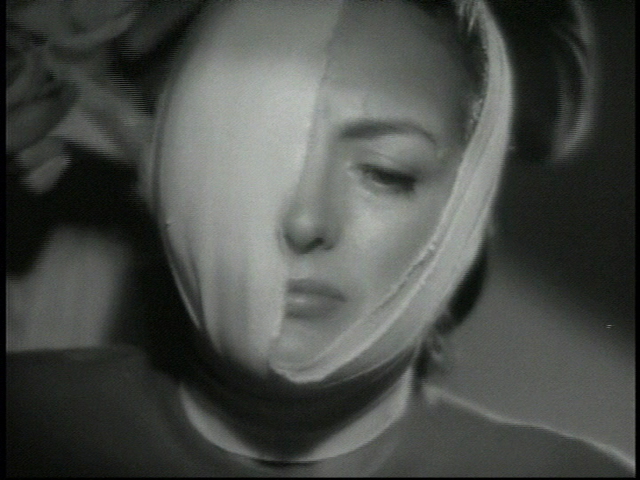
A disfigured Joan Crawford, planned child murder, weird accents and Ma Kettle comes together in this flashback-filled film that contains Joan Crawford's best performance (that I've seen anyway).

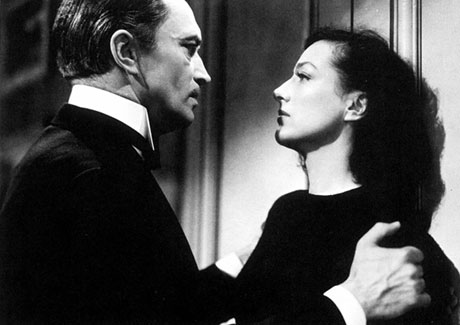
Anyway, Joan Crawford is Anna Holm, who had the side of her face disfigured in a childhood fire that took her family. Suffering a life of mockery and abuse, Anna becomes a cold-hearted blackmailer. She meets a plastic surgeon who is able to fix her disfigurement, but she is tempted to go back down a the dark path when the man she is in love with concocts a scheme to murder his four year old nephew that is currently set to inherit his family's fortune.

The film is presented in a series of flashbacks during a murder trial in which Anna is the accused. It allows for the film to unfold almost like a mystery as it plays with our expectations and goes into all sorts of directions.

As I said, the film is the best Joan Crawford performances that I've seen. She has to play such a nuanced character, someone who has suffered a very hard life, but begins to let herself love and grow, and she pulls it off believably.

Unfortunately, the film falls into some predictable territory once the 4 year old nephew (Richard Nichols, who was also in Kitty Foyle and the Bette Davis film All This, and Heaven Too) enters the picture. The kid is overtly cutsey and "golly gee whiz, I love ya" and you begin to get an idea where Anna story arc is going to go. In addition, the other characters are not nearly as interesting as Anna. The plastic surgeon, Dr. Gustaf (Melvyn Douglas) is a fairly boring character who oddly offers to fix Anna's face in the middle of a break-in, and Anna's love, the sinister Torsten (Conrad Veidt) has a rather peculiar and unbelievable character arc where he descends into homicidal madness.

But the film is worth seeing alone for Joan Crawford's performance, because it really does showcase her talent for playing a variety of characters, having to be both cold-hearted and spiteful as well as vulnerable and maternal.

Sunday, May 17, 2009

The Women (1939)

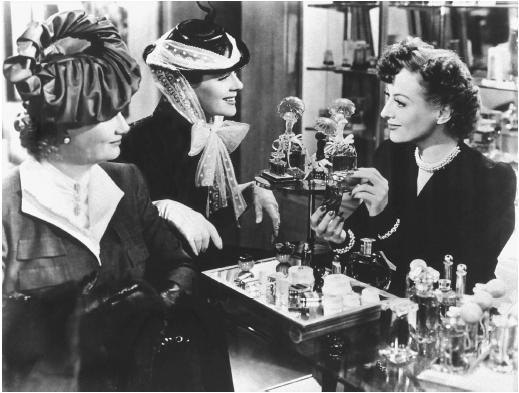
The Women is about a bunch of rich women who are all, for the most part, catty, b*tchy, and two-faced. It's because of this that it is in my top movies ever.

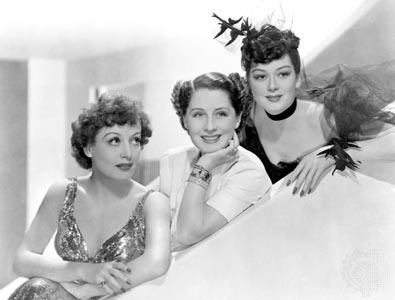
The film follows Mary Haines (Norma Shearer) the wife of a rich New Yorker who discovered that her husband is having an affair with perfume counter girl Crystal Allen (Joan Crawford). She divorces him, despite still being in love. Is there a way for her to win her man back? Will she cling to her pride and forsake him? Tune in an find out!

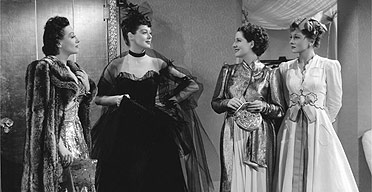
Ok, that's really only a bare-bones view of the plot, because the film isn't that heavy on it. Instead it really focuses on a bunch of Mary's "friends" consisting of Sylvia Fowler (Rosalind Russell), Peggy (Joan Fontaine), and Edith (Phyllis Povah). And of course, a single male does not appear in the film.

But the only one you need to care about is Rosalind Russell as Sylvia, because she gives, in my opinion, one of the greatest performances of all time. Sure it's not emotionally demanding, and it's over-the-top (intentionally, though), but she's so catty, spiteful, and just plain nasty that you anticipate her every appearance. She's like a b*tchy version of Lucy Ricardo, she looks down on everyone, and the only difference between her friends and everyone else is that she doesn't let loose her venom on her friends (if they're in the room, that is).

The rest of the cast is good as well, but they all pale in comparison to Miss Russell, especially the leads. As effective as Shearer and Crawford are, they're still the "Good Girl" and the "Bad Girl" and there isn't much variation from that formula, but there really doesn't need to be.

Besides Rosalind Russell, the film's greatest strength is its script, which pops and crackles with wit and biting satire of the wealthy. It's also a script you have to put some effort in to savor, because every line is delivered at a rapid-fire pace.

For a serious moment, I think it needs to be brought up on whether or not this particular film is sexist, which is something I've heard a lot of when reading about the film. I personally don't find the film to be terribly sexist. You could make the point that men are used in this film as much as the women are. Crystal is basically using Mary's husband Stephen as a way to push herself up the social ladder and into a life of wealth. Yes there are two moments when women take their husbands back, but they do so because they still love their husbands as opposed to some sort of social force making them do so. In fact, Mary divorces Stephen despite her mother basically saying "Hey, it happens, put up with it. That's how men are".

If you really want to look at the theme of the film, it's really a critical look at the wealthy as well as looking at Pride Vs. Happiness, which Mary deals with as the film goes on. She can divorce Stephen out of a wounded sense of pride, but he loves her, is a good husband and father, and she loves him. And if that is the case, wouldn't it be best for all to stay? Mary's last line in the film is "Pride is a luxury a woman in love can't afford" (or something like that), is that true? It's really up for us to decide, but I think the film presents an argument that anyone, man or woman, should do that will ultimately provide them with the most happiness.

Friday, May 15, 2009

Rain (1932)


(Doesn't Joan look like the biggest drag queen in the world in that picture?)

Here we have another film featuring a member of the world's oldest profession. Only this time, she partners up with a wise-cracking priest to take down a magical pimp and save a bunch of her captive hooker friends.

Ok, not really.

Rain is the story of Sadie Thompson (Joan Crawford), a prostitute on a boat trip that is forced to stop in Pago Pago, a Samoan village, due to a possible outbreak of Cholera. So, Sadie and the other passengers are forced to stay in the local inn. Unfortunately for Sadie, the other passengers consist of a missionary group headed by Alfred Davidson (Walter Huston), a very devout, very stern man. Needless to say, they look down upon Sadie for her rough talk and her habits of partying and drinking with sailors. Because of her tainted soul, they wish to either save Sadie or to force her to go back to America, where she is in some sort of trouble with the law.

Rain, is actually a very strong look at religious hypocrisy, which is surprising given when it was made. But while Alfred makes it known that Sadie's soul is in danger and that she needs to allow herself to be saved, he is secretly lusting after her, and what follows is a complete slap in the face to those who consider themselves morally high and mighty.

Joan Crawford is actually very good in the role, which surprised me. I watch watching a Bio of her on TV and they showed a clip from the film and I thought she looked wooden, but when I actually saw the film, I thought she was amazing. She makes Sadie a very well-rounded human being. She isn't a hardened, f*ck the world type of woman, but she's not a total pushover either. When she's mad, she'll speak out, but she expresses remorse over it, which makes all the more realistic and sympathetic.

The group of missionaries is the complete opposite. They come across as very repressed and wooden, which allows for a sharp contrast between the saints and the sinners of the film. Walter Huston is very much the same way, but we get the feeling that he is holding back something great and powerful, and we only get to see glimpses of that as the film goes on.

Rain is a great little film that's been lost in time, and I don't hear that much about it, but it features some brilliant acting and a message that still rings true to today and it is definitely worth a look.