Showing posts with label Bette Davis. Show all posts

Thursday, November 19, 2009

The Great Lie (1941)

Here we have one of Bette Davis' lesser known films, which happens to be one of her better films.

Anyway, Bette Davis is Maggie, a young woman living on the plantation full of obedient Negroes. Her former flame Peter (George Brent), has just married concert pianist Sandra (Mary Astor) only to find out that their marriage is legally void. Of course, the only reason these kinds of things happen in old movies is to have poor Sandra knocked up with Peter's baby, and unfortunately for her Peter has returned to Maggie and married her. And unfortunately for both women, Peter's plane disappears over Brazil and he is presumed to be dead (but we know better, right?). So Maggie and Sandra, who have been rivals, come to a truce and Maggie hopes to care for Sandra during her shameful, sinful pregnancy. This leads to a great scene where both women are in a cabin out in Arizona and Sandra basically goes insane.

Anyway, the baby is born, Peter returns from the dead and Maggie claims the baby is hers, an arrangement with which Sandra has no objections. Or does she? Tune in to find out!
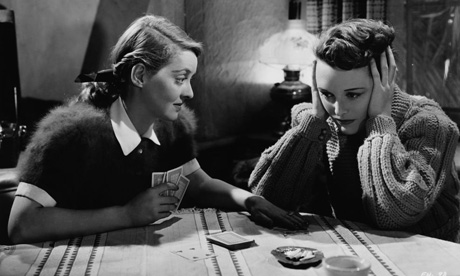
The film is an above average soap, and what really makes it memorable is the performances by the two leading ladies (who actually re-wrote the script together). Bette Davis is in the most least Bette Davis-y role you can expect, as the southern good girl aiding the woman pregnant with her husband's child. But she pulls it off with genuine kindness and sympathy.

Mary Astor, however, steals the show as the vain, arrogant, and catty pianist who find herself stuck in a situation that she loathes. She has lost her man, but doomed to carry his child, and Astor gives an Oscar-winning performances full of bitterness and bile.

Luckily, the film never really switches the focus from either of the two women, so it's able to maintain your attention throughout.

It's a nice little film that doesn't really get a whole lot of attention (well, besides an Oscar), and it's also a good show of Bette Davis' range, that she could convincingly play the good girl of the movie. So, I suggest you watch it, especially if you're a Bette Davis or Mary Astor fan.

Sunday, October 11, 2009

The Girl From 10th Avenue (1935)


In honor of the recent anniversary of her death (the 8th), I'll make an entry about one of Bette's earliest starring roles.

Bette Davis plays Miriam Brady, a shop girl who discovers the wealthy Geoffrey Sherwood (Ian Hunter) drunk and angry on the streets, yelling at the wedding party of the woman who rejected him for a wealthier man. Miriam takes Geoffrey to a cafe, to avoid the police who may arrest him for being drunk. At the cafe, two of Geoffrey's friends offer Miriam $100 to keep an eye on Geoffrey for the day.

The two wake up the next morning to discover that they had gotten s-faced and married each other. Miriam gives Geoffrey the go-ahead to leave at any time, but he stays with her and she helps keep him sober. But soon Geoffrey's former flame enters the picture, which complicates things.

The film is watchable, only because of Bette Davis. Really, because Ian Hunter is so boring, and so weak that we don't really care about what happens to him. Whereas Bette Davis is dynamic and interesting (though it's a role we've seen from her many times) as a tough, yet sensitive woman who is falling in love with a man who could leave her at any moment.

Plus, the film tries to make Miriam's lower class upbringing and behavior a major factor as to why Geoffrey may leave her, since his old girlfriend is wealthier and refined. The problem with this is that Miriam isn't really shown to be uncouth or anything that would make this such a problem. Her speech isn't really any different from any of the upper class people seen in the film, so the main contributor of the "Will he or won't he stay with her?" conflict isn't even apparent to the viewer.

That said, the film is a decent soap opera, with Bette Davis saving it from total mediocrity, which is common in a lot of her films. So if you're a fan, then see it.

Wednesday, October 7, 2009

The Letter (1940)

I apologize for not having a new entry recently, but the only movie I've seen of late was Spice World, which is a childhood favorite turned guilty pleasure, and I'm sure that if I did an entry on Spice World, I would soon be chased off by angry villagers carrying torches and pitchforks.

Anyway, here we have another Bette Davis classic, The Letter. Bette Davis plays Leslie Crosbie, a wife of a wealthy rubber plantation owner in Singapore who murders a man in, what she claims to be,
self-defense. Her husband believes her story completely, whereas the family lawyer Howard Joyce (James Stephenson) suspects that Leslie may not be telling the truth. This is confirmed when he receives the news there is a letter in the possession of the dead man's widow from Leslie, which sheds some light on the relationship between her and the man she killed.

William Wyler did a great job with directing this film (He's probably made some of Davis' best films), it's very moody and sultry, and he also gets a great performance out of Davis. Leslie Crosbie is someone who is constantly scheming, playing the role of a devoted and pure wife when she's anything but. And Davis portrays this cold, calculating nature perfectly, while also adding the confusion and forced emotionality she would need given her facade of being totally innocent of her crime.

But I must take this time to warn you, dear readers, that the ending of this movie sucks. Now, usually this is the fault of the director or screenwriter, but this movie has a tacked on ending that the crew was forced to add due to the Haye's Code that legislated morality in film. So, if you have an issue with the ending, it's not necessarily the fault of the filmmakers, instead the liability falls into the filmmaking bodies of the time that attempted to control what was and wasn't shown in the movies.

Aside from the ending, the film is fantastic. It's dark, it's moody, it's mysterious, and it has a series of strong performances all around with Bette Davis giving one of her best at the conniving wife. It's really one to see.

Thursday, September 17, 2009

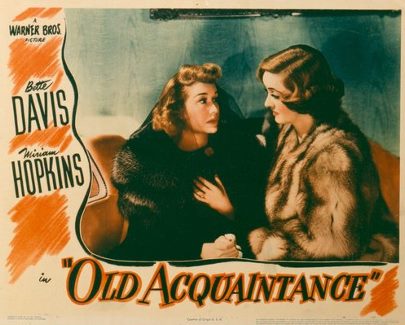
Old Acquaintance (1943)

Bette Davis and (the one woman she admitted to hating) Miriam Hopkins star together in this wonderful soap about friends who kinda hate each other.

Bette Davis is Kit Marlowe, an unmarried independent author who has written a critical hit of a book that is unfortunately, not selling very well. She is "friends" with Millie Drake (Miriam Hopkins), an over-the-top attention whore of a shrew who only is able to retain her friendship with Kit because Kit feels a deep sense of responsibility to her because of their childhood together. It doesn't help that she is in love with Millie's husband, who also feels the same way about Kit, and further adding to the friction is when Millie decides to become an author as well, writing trashy romances that make millions. The film follows their friendship as well as their fights and squabbles.

What works about the film is that you never really buy Kit and Millie as friends, Kit is simply too smart and too low-key to enjoy being in the company of the hysterical Millie and the film brilliantly adds conflict after conflict to eventually force the two to have it out. Plus, it's very soapy, with catfights and forbidden love and the stuff that classic films excelled at with class.

As to be expected, the two leads are great. Bette Davis is often cited as being a Hollywood "bitch" but she was much more versatile than people think and the strong, independent, yet still vulnerable woman is a role in which she excelled. Kit is intelligent, kind, warm, and strong, but clinging to a foolish sense of duty to Millie as opposed to following her own feelings. Miriam Hopkins has a license to be overly dramatic in this film, and she takes full advantage of it, not really making an effort to make Millie very likable, instead being as shrill as possible. And as I said, their friction is believable, in part because the two actresses publicly admitted to hating each other, which is odd since they made 2 films together (The other film, The Old Maid doesn't utilize their feelings towards each other in the way that this film does).

This seems to be (to me at least), a lesser known Bette Davis film, which is a bit sad, because it is one of her better films. Granted, at the end of the day, it's a big soap opera and the strong woman is a character that Bette Davis has played countless times before, so this is not new territory for her. But the film still succeeds at offering a good soap with good acting and some good bit of "frenemy" action before that became an actual term.

So watch it, if you can.

Monday, September 7, 2009

The Star (1952)


Bette Davis stars in a film that is apparently supposed to be a thinly veiled portrait of Joan Crawford. That alone makes this movie a must-see.

Well, not really. Bette Davis plays Margaret Eliot, a now has-been actress who is struggling to keep afloat, but through her renewed romance with former co-star Jim Johannson (Sterling Hayden), she may realize that love is more important than fame.

The film itself is one big cheese-fest, with Bette Davis showing why she may be one of the greatest actresses who ever lived. She may be over the top, but she is insanely entertaining here. I mean, this film has a scene where (I kid you not) Bette Davis throws her mooching sister and brother-in-law out of her house then grabs her Oscar and says "Come on Oscar, let's you and me get drunk!" only to cut to Bette Davis driving around the Hollywood hills with her Oscar propped up on the dashboard and a bottle of booze in her hand.

It may be the greatest scene in the history of film.

Ok, to be serious for a moment. Bette Davis is the only reason to see this movie. It's a corny, soapy film that Davis elevates by actually giving a good performance. Granted, it's over-the-top, but it can get a bit of a pass because she's an actress, and generally people in the arts can be over-the-top (or so says any movie review in which someone is playing an actor/dancer/artist). But aside from that, the film is pretty dull. Her romance with Jim lacks any sort of spark and Sterling Hayden (I keep expecting to write Sterling-Cooper) is wooden in a role that's not particularly fleshed out. The actual plot is pretty shallow too, and only really entertains on a pure campiness level, like when Margaret gets a role in a film as a frump, but she tries to sex it up using her hair, make-up, and costume only to watch the dailies and fall screaming to the floor.

To put it plainly, this is a film you could easily skip, unless maybe you are hardcore Bette Davis fan (like I am) and you're interested in seeing her Oscar nominated performance. But other than that, unless what I just described sounds like your idea of a good film, it's a pass. Campy entertainment and not much else.

Sunday, August 23, 2009

Now, Voyager (1942)

Alright, it's been a while since I've made a post on a classic film, so why not jump back into Old Hollywood with a Bette Davis movie? And better yet, this is one of Bette Davis' best.

Bette Davis plays Charlotte Vale, a frumpy spinster living in Boston under the thumb of her domineering older mother (Bette Davis actually appeared without any make-up during the films opening scenes), who is whisked away to a sanitarium by the kindly Dr. Jaquith (Claude Rains). There, she begins to change from a timid frump into a beautiful and more confidant woman. After leaving the sanitarium, she goes on a South American cruise and encounters Jerry Durrance (Paul Henreid), and the two fall in love, despite Jerry being married and refusing to leave his horrible wife out of the fear that he will lose his daughter. Complications arise and the story of the two lovers becomes intertwined with Charlotte's blossoming into the woman she always wanted to be.

Bette Davis is absolutely fantastic in the part of the neurotic young one who evolves into a swan. She doesn't turn it into a before and after type characterization, Charlotte slowly and slowly becomes more confidant as the film goes on and every step feels believable and real. We pity her for her mistreatment from her mother and we root for her to find love and happiness.

The supporting cast is good as well, with Claude Rains excelling as the caring and wise doctor who takes Charlotte under his wing. Paul Henreid is fine too, playing a character that is conflicted in his love for another woman and for his own daughter. Gladys Cooper is brilliant as Charlotte's domineering mother, she never seems to give a second thought to making her character thoroughly despicable and unlikable.

This film is fine example of the superior soaps that were being made during this time, which were able to remain soapy and entertaining without venturing into eyeball-rolling territory. It also takes a few directions that one might not expect (Bette Davis herself had a theory as to what happens after the film, which I like to think is the truth), which helps it rise above being too corny, plus, the level of acting elevates the material to a point where it comes across as genuine emotion as opposed to hokey scenery chewing.

In case you haven't guess it by now, I heartily recommend this movie, especially for older film buff or fans of Bette Davis. While some people may find the films soap opera-ish story to be a turn off, it's such a finely crafted film that you should give it a chance.

Sunday, August 9, 2009

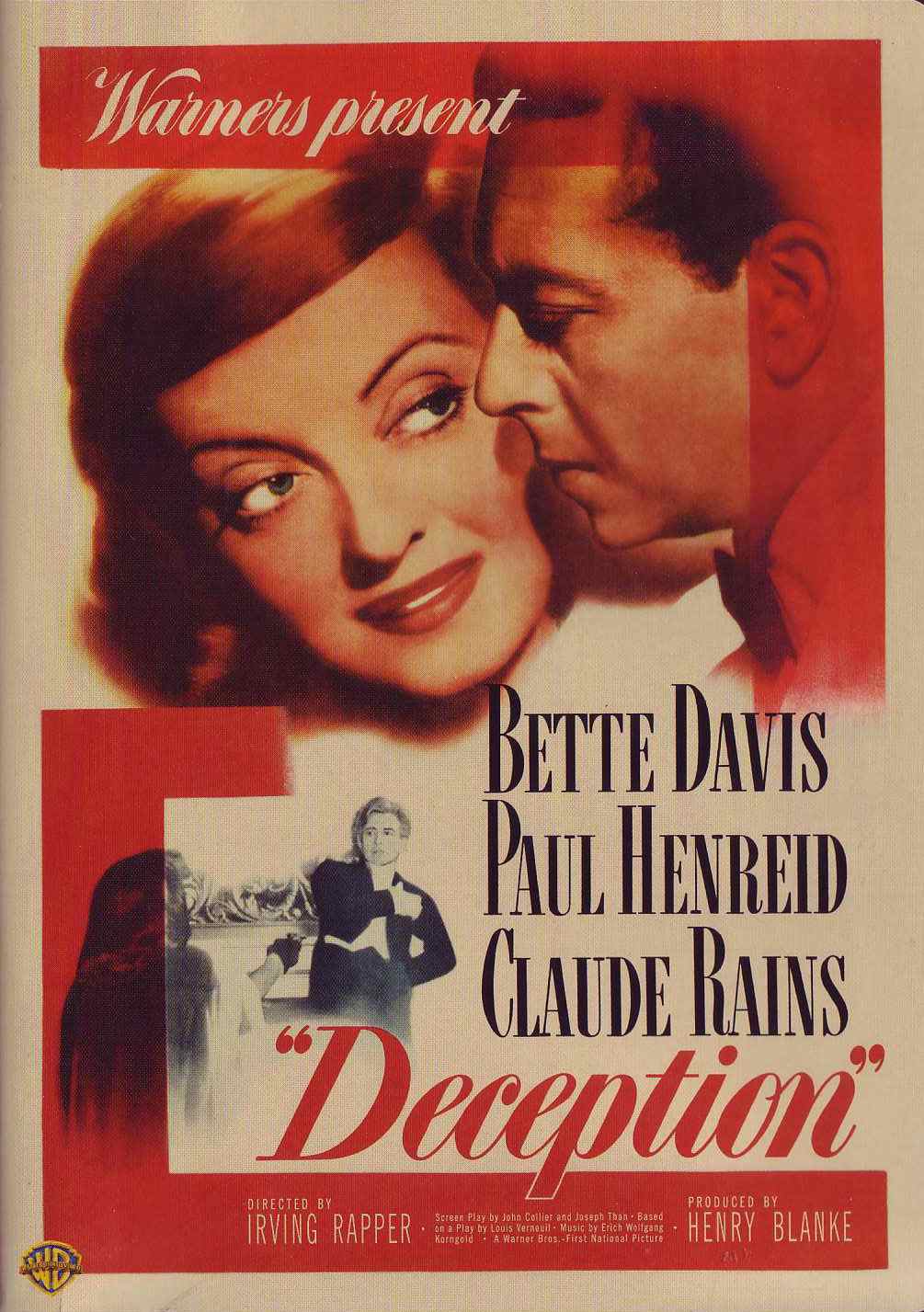
Deception (1946)


Ok, it's been a while since I've actually given a write-up to a Bette Davis movie, and since yesterday was Bette Davis say on TCM's "Summer Under the Stars" I figured I would write about one of her lesser-known movies.

Bette Davis is Christine, a pianist who believed for many years that her long-lost lover cellist Karel Novak (Paul Henreid) was killed in the war. That is, until she encounters him during a concert and the two resume their romance. However, during Karel's absence, she had taken a new lover, the famed composer Alexander Hollenius (Claude Rains), a fact that she hopes to keep from the incredibly jealous Karel, even if she has to resort to desperate means to do it.

Karel is a jealous type, all right, which is actually the movie's downfall. Bette Davis and Claude Rains are on a high level here, especially Rains who revels in the part of the brilliant composer toying with Christine and Karel's romance. But the main problem is that Karel is such a jealous douche that it's hard to find yourself becoming tense or worried when Christine's affair comes close to being revealed. I mean, when he sees her beautifully furnished apartment when they first reunite, he tries to STRANGLE her, believing her to have taken up with another man, and later he slaps a glass out of her hand. I mean, I dunno what your views on monogamy are, but I would think that if you were thought to be dead for years, it would be ok for your significant other to find someone else, especially when they immediately come back to you. So it's hard to actually care for the character that would supposedly be destroyed by the revelation that the film hinges upon.

Luckily, Bette Davis makes us care for her character, so there is some investment in whether or not her relationship is revealed, but it's purely for her sake, not Karel's. But if there's any reason to see the movie, it's Claude Raines, who plays such an interesting character. He loves Christine, yet he's jealous enough to where he sets out to destroy her and her new husband and he does it all with a smile on his face and cheeky remark on his lips.

The film itself isn't horrible, it's just hard to invest yourself in the main romance, but aside from that, it's not a bad movie. But if you happen to like the cast from the film, check out Now, Voyager which features the same actors and is MUCH more enjoyable.

Saturday, July 18, 2009

The Little Foxes (1941)


Another Bette Davis movie, but this one features what I believe to be her greatest performance.

When it comes to The Little Foxes, I am going to admit that I am extremely biased, since it's the kind of film that I love. Only a handful of characters, a lot of scheming and backstabbing in order to gain power, very dialogue-driven, and of course it has Bette Davis.

Bette Davis is Regina Giddens, a frozen ice-b*tch from Hell. Due to being a women, her father only viewed her two brothers as his rightful heirs, so while they have financial independance, she had to marry a wealthy man in pursuit of her own fortune. Regina's two brothers Benjamin (Charles Dingle) and Oscar (Carl Benton Reid) are planning on opening a cotton mill, but lack all of the necessary funds to do so, causing Regina to scheme and plot in the hopes of gaining control of the mill.

Let me say, this is Bette Davis' best performance, and that is saying a lot. For those who accuse her of being overly theatrical or hammy, this performance is anything but. She is an ice queen using and manipulating anyone she can to gain wealth and power, and Davis creates so much venom with her eyes that it's a marvel to observe. She is total restraint, yet she eminates power, greed, and corruption.

The rest of the cast is good as well, with Theresa Wright and Patricia Collinge giving Oscar nominated performances as Regina's innocent daughter Alexandra and Oscar's depressed and slightly off wife Birdy.

Another standout is Charles Dingle as Benjamin, who gives his character a sly wit that is a great counterpoint to the deadly serious Regina.

The script isn't as snappy as maybe one would expect, but it handles the backstabbing and trickery well by keeping it fairly low key and never going into theatrics or making the dialogue go too over the top.

This is a brilliantly made featuring some great performances, if you are a Bette Davis fan, you have to see this movie, because she is absolutely fantastic.

Friday, June 19, 2009

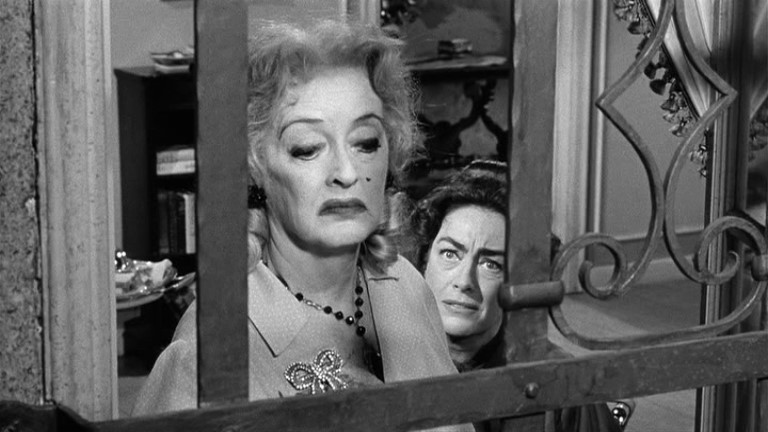
Whatever Happened to Baby Jane (1962)

Bette Davis and Joan Crawford are brought together for what should be considered the Holy Grail for fans of Classic Hollywood Catfights and B*tchery.

Bette Davis plays Baby Jane Hudson, a former child star who quickly lost her luster as she grew older. Unfortunately for her, her sister Blanche (Joan Crawford)'s career took off and she became a movie star. Unfortunately for Blanche, booze and jealousy combined in a car accident that left her in a wheelchair, leaving her in the care of her sister who begins to grow more and more unstable.

Let me get this out of the way and say that both leads are fantastic, but this really is Bette Davis' show. Blanche has to be the sympathetic character, so she remains much more one note than Jane, who gets to go from bitter alcoholic to going through a twisted second childhood. Davis hits all of the emotional beats perfectly in a role that could have easily been played to scenery-chewing camp, but Bette Davis gives Jane a sort of internal turmoil and humanity that could have otherwise been lacking.

In fact, the whole movie somewhat tricks you, it starts out as you would expect, with Jane mocking and abusing Blanche in a sort of dark-comedy, but it slowly fades away as Jane begins becoming more and more unstable and what we're left with is two wounded individuals who have hurt each other and have made some horrible mistakes.

The film is primarily about the two leads, with only two prominent secondary characters. Elvira (
Maidie Norman), the housekeeper who is Blanche's only ally in the house, and Edwin (Victor Buono), the pianist Jane hires to accompany her when she begins planning to resurrect her act. Buono actually received an Oscar nomination, but to be honest, I'm baffled by it. It's not that he does a horrible job, but his character is basically just a slimeball loser who lives with his mother.

This is a film that deserved to be seen. It's a very dark little movie, but you have two of classic cinema's biggest titans (who hated eachother) together in one film and delivering great performances. There's not really a whole lot to hate.

Friday, June 12, 2009

Marked Woman (1937)


Bette Davis is a hooker is sets out to destroy the mob. Really, do you need to hear anything else?

Ok, since this is a blog about movies, I suppose I should actually tell you something about the film. Bette Davis plays Mary Dwight, a "hostess" at a nightclub that has recently come under ownership of Johnny Vanning (Eduardo Ciannelli), a dangerous mob boss who has killed past "hostesses" for knowing too much. When one of her "clients" is murdered for paying his bill in bad checks, Mary is arrested and encouraged by D.A David Graham (Humphrey Bogart) to assist him in bringing Vanning down. Mary agrees, only to aid Vanning by presenting false evidence. However, Mary must turn to Graham when Vanning turns against her in an effort to bring Johnny to justice.

Bette Davis is pretty good in the title role. Granted, a tough girl is not exactly the hardest role for Davis to play, but she gives Mary some intelligence which at least adds some depth to the character. But there are some moments where she descends into melodrama, but at least in one scene it works, since it's supposed to be an act for the D.A.

Bogart is good in this film as well, despite his character being fairly shallow. He really only exists as a crusader out to destroy Vanning, and despite his character making claims of growing up in poor situations, we never get anything beyond. If the film would have gone a bit into his backstory, the character could have become more realized.

The rest of the cast is all serviceable. Since the film is mainly a vehicle for Davis, she gets most of the screentime and we don't really get anything from the other character to suggest any sort of well-roundedness. Though it's worth mentioning that Jane Bryan plays Betty, Mary's sister, and she has a very bizarre story arc. She is in town for a college football game and is under the idea that Mary is a model in a dress shop, but once she finds out about Mary's whoring, she suddenly decides to drop out of college and become a party girl. It's very odd and hardly believable, but it moves along the plot so we have to take it as is.

The actual plot of the film is a bit predictable, and we can guess all of the major plot points before they happen, but as with most films, the performances are what makes the film interesting and the two leads of Davis and Bogart are good enough to make this film easy to watch (it's also fairly short, only around 90 minutes)

Thursday, June 11, 2009

Jezebel (1938)


I apologize for doing another Bette Davis movie, but I actually rewatched this film last night and figured I should go ahead and do an entry on it, since it is a Bette Davis movie.

Bette Davis is Julie, a spoiled New Orleans woman who is engaged (again) to banker Preston Dillard (Henry Fonda). Their relationship has been marked by a series of petty quarrels, usually initiated by Julie in an attempt to make him jealous or simply to f*ck with him. This time, since Pres was at an important bank meeting and unable to go to her dress fitting, Julie decides to dress up as a whore to the Olympus Ball which basically gives everyone the vapors, most of all Pres who ends up breaking his engagement with Julie, who is convinced that Pres will return to her.

A year passes and Pres has moved to the North on bank duty, but is forced to return when Yellow Fever begins infecting the townspeople. Julie throws a party at the family's plantation only to get a shock when Pres shows up with his wife on his arm, a Yankee named Amy.

The plot isn't terrible surprising. The moment we hear that Pres is coming back and Julie's freaking out, we know that he's going to be married or engaged or in some other state to complicate things. But the film does have Bette Davis.

This is the performance that landed Bette her 2nd Oscar (though I think her two wins should have been for different movies), and it's a great performance. She plays Julie as very spoiled, petty, but strong-willed. She may be a spiteful young lady, but we get the sense that there is some strength within her. She also to make great highs and lows in the film, committing horrible acts as well as being self-sacrificing, and she pulls it off believably.

Fay Bainter (who also won an Oscar) plays Aunt Belle (apparently she is both Julie and Pres' aunt, which is messed up), and she really brings the necessary heart to a film about a mean-spirited southern belle. And special attention should be made to Margaret Lindsay who plays Pres' new wife Amy. She has to serve almost as the Anti-Julie in the film. She is low-key, thoughtful, but like Julie she is strong-willed woman and she really makes you feel sorry for her despite her character being relatively minor.

The rest of the cast is decent. Henry Fonda is passable, Pres is such a wishy-washy character that it's hard to get him any sort of real strength, he basically lets Julie screw with him over and over and only puts his foot down 1 or 2 times. George Brent is also decent as Buck, a former flame of Julie's who still loves her. But I've seen Brent in several movies and he's really not that great of an actor.

The sets, costumes and directions are all outstanding (it's terribly unfortunate that the film is black and white) and with the addition of the strong performance by Bette Davis, Fay Bainter and Margaret Lindsay, it makes this film one that is easy to recommend, especially if you love Gone with the Wind and you enjoy seeing b*tchy Southern women ruin other peoples lives.

Thursday, June 4, 2009

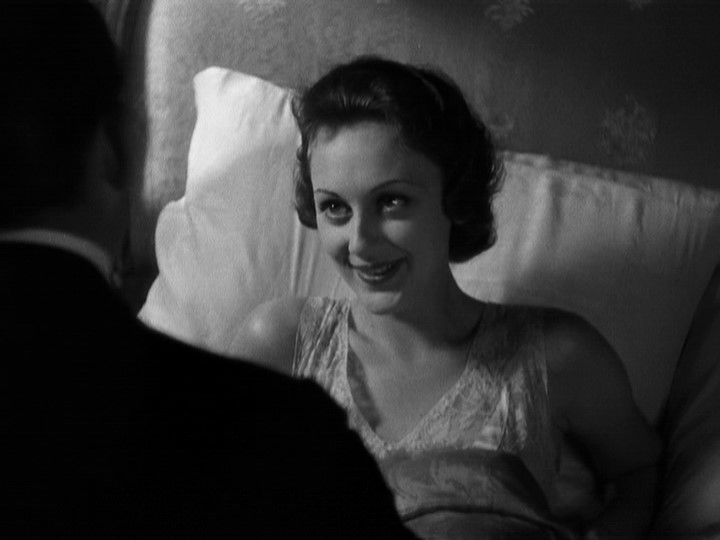
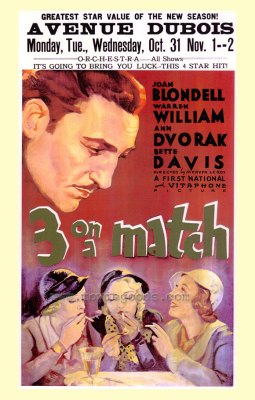
Three on a Match (1932)

This won't spoil anything (since the film itself presents this information fairly early in the film), but Three on a Match is named for the urban legend that if soldiers during the war lite their match and kept it aflame long enough to light three cigarettes, one of the soldiers would be shot by an enemy soldier due to the cigarette signaling their location long enough to aim and fire.

The film itself (which is part of the Forbidden Hollywood collection from TCM) follows the lives of three classmates who meet later in life and become friends, the three women are Mary (Joan Blondell), Vivian (Ann Dvorak), and Ruth (Bette Davis). The film focuses mainly on the lives of Mary and Vivian, with Ruth being a supporting character that doesn't really do all that much. Mary was the "bad girl" of the group and is currently an entertainer, Vivian is the wife of a wealthy lawyer with whom she has a son, and Ruth is a secretary.

Vivian however, is bored with life and decides to run off with her son and shack up with Mary's gangster boyfriend, where she starts abusing drugs and drinking. Vivian's son is eventually found and Vivian's husband divorces her and then marries Mary. Because he is financial strapped, Vivian's boyfriend plots to kidnap her son and hold him for ransom.

The plot of the film is fairly predictable, but there is a very strong performance on behalf of Ann Dvorak, who has to play a very multifaceted character. She has to be a bored wife who throws it all away for a life of booze and then sinks into financial desperation, all the while maintaining a fierce maternal instinct that forces her to make some hard choices in order to protect her son. Joan Blondell is good as well, playing the former bad-girl who hasn't had the easiest life. Bette Davis, unfortunately is completely underutilized (though, that's to be expected since this is one of her first films) and her character is totally underdeveloped, almost like a glorified babysitter for Vivian's son.

Since the film is part of the Forbidden Hollywood collection (As was Baby Face and Red-Headed Woman), there's a fair amount of scandalous material in the film, such as the suggestion that Vivian is using drugs, as well as her staying in a motel room with a man who is not her husband, in addition to a fairly graphic (for its time anyway) death late in the film.

The main reason I watched this film was to add another notch in my Bette Davis film count, and while I was disappointed in how her character was handled, the film itself is pretty good. As I said, the plot isn't terrible complex, but the performance of Ann Dvorak is incredible and single-handedly makes this a film that should be seen.

Tuesday, June 2, 2009

Of Human Bondage (1934)


Here it is, the film that started it all! While I had seen a few Bette Davis films before Of Human Bondage, watching this film sparked my initial exploration of her filmography, and I have never looked back.

The film features Leslie Howard as the club-footed Phillip Carey, a failed artist who trades in his brush for a scalpel and becomes a doctor. Unfortunately for Phillip, he falls in love with the rude, cockney-accented waitress Mildred Rogers (Bette Davis), which sets about a depressing cycle of Mildred abusing Phil, running to him whenever her current sugar daddy gets tired of her. Unfortunately for Phillip, she usually comes back whenever he is in a relationship that is starting to get serious.

The film itself isn't terribly good, there's a lot of weird, awkward camera work, and Leslie Howard comes across as very wooden (I've heard people who praise his performance, but I just didn't see it), he essentially mopes around from relationship to relationship only to throw it all away for a woman who openly treats him like garbage, which can be frustrating. He's in another Bette Davis film, called The Petrified Forest, and he's much better in that film.

The real reason to see this movie is to see Bette Davis' breakthrough role (the role that caused her to receive a consolation Oscar the next year for Dangerous). In a time when actresses didn't want to play nasty characters, Bette Davis dives in head first and makes her character as horrible and crude as possible. She doesn't really give a flying fig if you like Mildred or not. She is full of so much venom that she release in a steady flow of insults and apathy towards Phillip that her eventual blow-up at him is astounding.

It really established Bette to be what Marlon Brando would later become years later, someone who gave explosive, realistic performances (some may scoff at this by today's standards, but it's true), with some at the time proclaiming this performance to be the greatest screen performance by a woman in history.

For Bette's performance as well as earning it a place in film history for changing the way that some viewed acting, this film should be watched. It's good enough to warrant a recommendation, but just be aware that the rest of the film as a whole is a bit mediocre.

Saturday, May 23, 2009

Bordertown (1935)


Bordertown is one one of the few older films I've seen that actually deals with issues with the Mexican-American community, however, the film's progressive views quickly lose their power due to an incredibly racist ending, as we shall soon see.

Bordertown stars Paul Muni as Johnny Ramirez, a Mexican American who recently graduated from law school. However, he quickly loses his license during his first case involving a socialite (Margaret Lindsay) who runs into a local man's car and totals it. Johnny is unprepared and quickly loses his case, and when Dale, the socialite offers to pay for the car, her boyfriend (who is also her lawyer) does not allow her and insults Johnny, causing Johnny to strike him, leading to his disbarment.

Embarrassed and determined to make some real money, he ends up as a bouncer in a night club run by Charlie Roark (Eugene Pallette), the two become friends and Charlie quickly realizes that he can use Johnny's intellect to his gain and uses Johnny as an adviser of sorts.

This all ends when Marie Roark (Bette Davis) enters the picture. One look at Johnny and she wants some red hot Latino Lovin so much so that she kills her husband and makes it look like an accident. Inheriting her husband's money, she and Johnny become partners in building a better, classier night club, at the opening of this night club, Johnny meets Dale and falls in love with her, which upsets Marie greatly.

The plot of the film is a bit iffy in its pacing, as what would usually be several major plot points are gone through very quickly and without much fanfare, such as the investigation in Charlie's death, or Marie's descent into insanity.

On that point, it brings me to the biggest issue with the film, the character of Marie Roark. I have no idea why she suddenly become to possessive of Johhny, the film really doesn't give any reason at all. We know she dislikes her husband, but Johnny didn't really show an interest in her, so I don't understand her killing her husband and then her sudden insanity. I guess you could argue that she is haunted by her crime, or you could even say that she's faking it, but regardless, the film moves her from possessive to out and out batsh*t crazy that it's baffling. It's not really the fault of Bette Davis, because the character is written that way, and it allows for Bette Davis to give a very over-the-top, neurotic (always clutching her hair or biting her fingernails) performance, but the character's motivation are far too murky.

Paul Muni is good as well, he plays a Mexican American without getting into offensive stereotype, but the character is fairly shallow. He's a decent guy out to make some money, other than that, there isn't much personality to his character.

And this brings me to the racism of the film. At first, it gives well-rounded portrayals of Mexican Americans are kind, but simple and poor, and it shows that Johnny meets a lot of prejudice because of his ethnicity, but (SPOILER ALERT) the film ends on such a horrible note where Johnny forsakes the life he has made for himself and returns to "his people", which according to him, is where he belongs after losing Dale due to his ethnicity. I suppose you could make the argument that he feels defeated and it's shown more as a tragedy that his character takes that view, and that the film itself isn't trying to say that about the Mexican community, but I'm not sure if I really buy it (END SPOILER ALERT)


Overall, it's hard to recommend this movie, because of the issues I mentioned. It's not offensively bad, but it's not terribly good either. If you like Bette Davis or Paul Muni or are interested in the portrayal of Mexican Americans, then maybe it's worth a look, but the uneven pacing, odd character development, and racist overtones take this film away from being truly good.

Wednesday, May 20, 2009

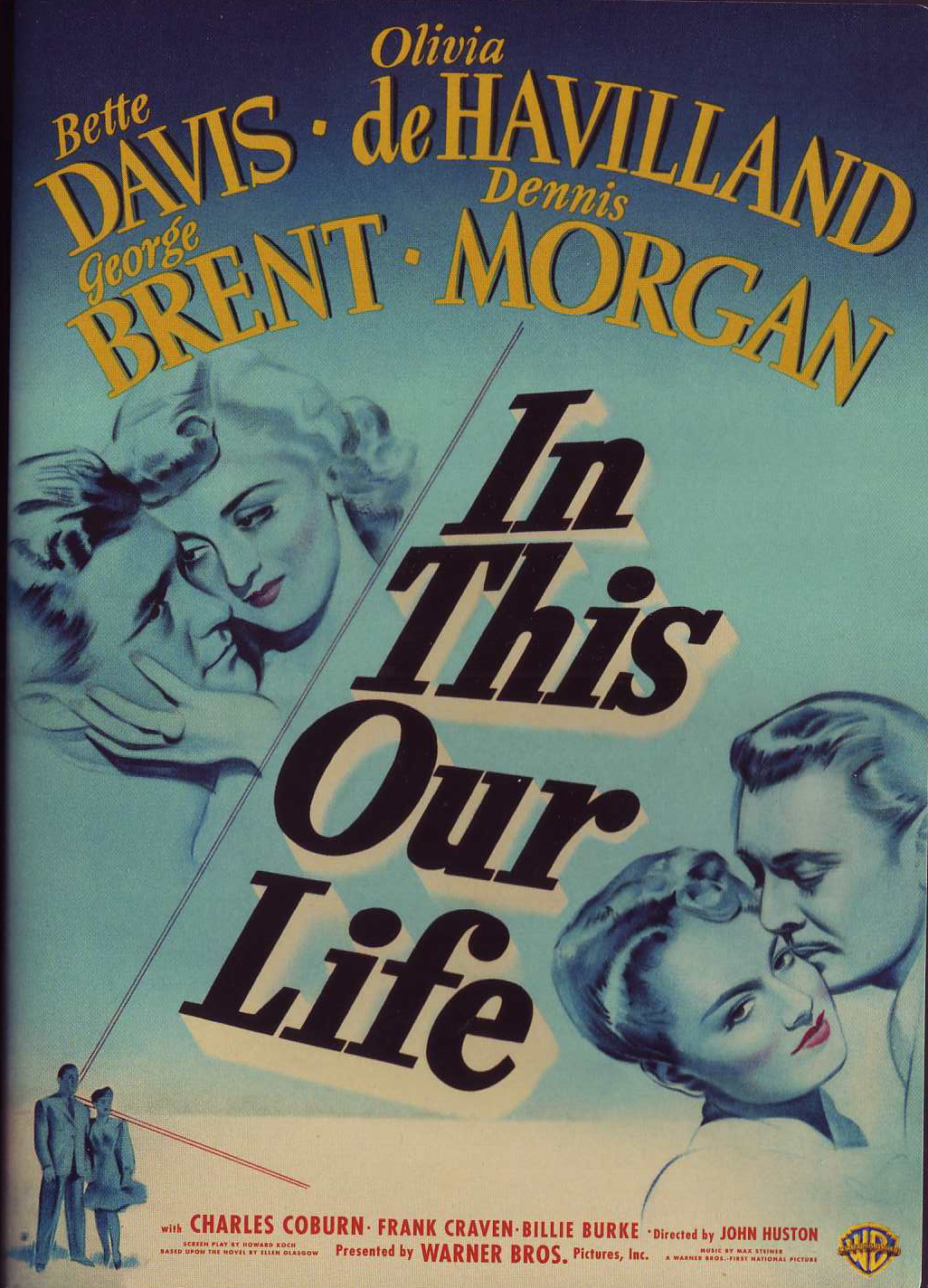
In This Our Life (1942)


This is easily one of the soapiest films that Bette Davis ever made, which is really saying something if you know anything about Bette Davis movies.

The film stars Bette Davis and Olivia de Havilland as the unfortunately named sisters Stanley and Roy Timberlake. And the plot goes as follows (Be sure to pay attention, it can be quite confusing). Stanley is engaged to lawyer Craig Fleming (George Brent), but she decides to steal Roy's husband Peter Kingsmill (Dennis Morgan) and run off. While they are gone, Roy and Craig fall in love. Stanley is so horrible that she drives Peter to commit suicide, so she returns home and plans on stealing Craig, her former beau away from her sister, who is his current beau. If read as is, it sounds like a tangled gay drama.

There is also a plot involving Stanley having a hit and run accident that kills a woman, and instead of fessing up to it, she blames the local black man who is studying to become a doctor or something, but since he's black they arrest him anyway. Of course, Stanley's story comes unraveled and she turns into a neurotic mess and ends up in a high speed chase with the cops.

Really, if you like your movies campy and soapy, then this in the film for you. Bette Davis gets to be nasty, mean, and selfish as well as over-the-top and neurotic while Olivia de Havilland gets to be sweet, virginal and innocent.

There really isn't much left to say about this movie, it's certainly not one of Bette Davis' best movies, but it's far from her worst. The acting is good enough to keep you entertained and the story is a big melodrama, which can be said for a lot of Bette Davis' films. If you're in the mood for something a bit trashy, then give this movies a watch.

Friday, May 15, 2009

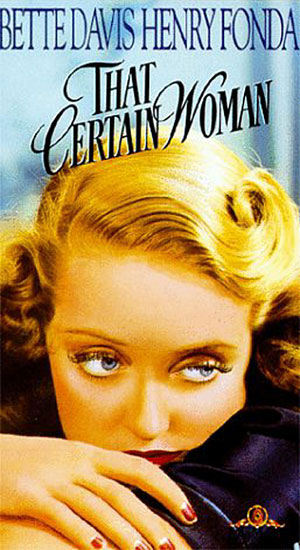
That Certain Woman (1937)


Behold, the absolute WORST Bette Davis movie I've ever seen (And as someone who has seen 36 or 37, I can't remember, Bette Davis movies, that's quite a statement). Seriously, this film has no idea what it wants to be and what story it wants to tell.

Bette Davis plays Mary Donnell, a secretary to attorney Lloyd Rogers (Ian Hunter) who is in love with her. Unfortunately for Mary, she has a secret. Though, it's not that secret because it's revealed at the beginning of the film. Mary used to be married to a bootlegger who was killed in the St. Valentine's Day Massacre. Since then, she's been a minor notorious figure in the news as a murdered mobster's wife so she changed her name and has taken her job as a secretary (which is where the film starts).

Mary is in love with the wealthy Jack Merrick Jr. (Henry Fonda) and they elope. However, since Mary is "common", Jack's father shows up and forces his pussy of a son to annul the marriage. Unfortunately, Mary is pregnant with his child, but decides to keep the baby and wait for him to return.

Suddenly, Mary's boss is sick and comes over to her house and dies, it's all quite sudden and the death puts Mary back into the spotlight as a notorious figure. Jack tracks her down, bringing his sickly wife in tow and proclaims that he will leave her for Mary, but Mary says no. Now knowing that Jack has a son, Jack's father tried to have marry declared an unfit mother and take the child from her. Since she knows that she cannot win, she gives the child up.

The last 5 minutes of this movie are so bizarre, and so odd that my head almost imploded. So, as Mary gives up the child, she tearfully tells her best friend to tell that child that she never existed, that he didn't have a mother. So, I feel sad, knowing that Mary is about to kill herself, because that's what the scene is suggesting.

WELL I WAS WRONG.

Mary instead takes off to some sort of exotic locale, wearing one of those huge hats that they wear in old movies and living it up, only to be told that Jack's wife had died and he wants her back. HAPPY ENDING.

Really, this movie is like three different Bette Davis films frankensteined together to form this cinematic abortion. Is it about her boss' unrequited love for her or her having to deal with being a single mother, or about her being famous, or about trying to get back with Jack? It can't seem to decide so it just throws them all together with glue and a prayer. Storylines pop up only to disappear minutes later and so on and so forth, it just feels so sloppy.

You don't care about any of the relationships because Mary's boss is too creepy and won't leave his wife, and Jack is just a wimp who left the woman he really loves because Daddy said too.

Bette Davis is watchable (as she always is) and interesting to watch, but she's surrounded by garbage, like a blind kid dancing in a burning house. It's kinda funny, but also kinda sad because you know the blind kid gets torched.

Don't watch this movie.

Tuesday, May 12, 2009

Waterloo Bridge (1931)


I selected this film because I decided to do one that didn't have Bette Davis in it, because I don't want you people (though as of now I haven't had any confirmation that anyone other than myself is reading these posts) to think that I'm one note. Well apparently I am, because I forgot that Bette Davis IS in this movie. Granted, it's one of her earliest films and it's a very small part, but Miss Davis does grace the screen during the course of this film. But who cares? You can never have enough Bette Davis.

But anyway, Waterloo Bridge! Hookers and the Army Virgins who love them! Old British Hookers and the Men who Don't! Rich Upper-Crust families who are *Gasp* not judgmental douches?

Yes, Waterloo Bridge has it all and more!

It also has Mae Clark as Myra, a former-chorus girl turned hooker. One day while trolling her usual spots, she meets a naive young (19 years old, wow) army virgin named Roy (Douglass Montgomery). Thinking that he wants a role in the hay, she takes his back to her place, only to discover that he is sensitive and stupid enough to suddenly fall in love with her.

Myra wants none of it and tries to throw him out. Shocked that a man is willing to love her for free, she feels conflicted, she wants to be with him, but it would destroy him to find out that his lady love has been strutting the street for coin so she tries to push him away. Unfortunately for her, as previously stated, he is naive and stupid and will not leave her alone, going as far to trick her into visiting his family. Myra feels worse because his family is well-to-do, but they accept her with open arms, which is kinda surprising. One day, in a fit of guilt, she tells Roy's mother who basically accepts it, knowing that Myra will break off the relationship because she doesn't want to hurt Roy.

Myra takes off and Roy follows, goaded into pursuing her by Myra's older hooker friend Kitty (That can't be her real name) since Kitty believes that Roy could take Myra away from her life of hookery and provide for her.

The plot progresses from there, but I don't really want to spoil any more than I have already. And though I treat the film lightly, it's really a great film. Mae Clark is great as a character who hates herself and assumes that everyone else in the world will too if they got to know her, yet she is conflicted because she sees Roy as a chance for love and some sort of redemption from the lifestyle she is currently living.

Douglass Montgomery is good as well, though his character is much more two-dimension than Clark's role. Roy is, as I said, naive and stupid, he's like a little kid who has his first crush. But it works, because it allows for all the conflict to come from Myra's struggle with her profession, as opposed to some sort of issue between the two. We get the sense that Roy won't really care about Myra being a prostitute, so it's really a matter of Myra coming to terms with it herself than a fear of Roy suddenly going crazy and leaving her (If you want a movie like that, see Bette Davis' Deception or Greta Garbo's Anna Christie which has a very similar plot).

The film is well worth watching, especially since it's pre-code which makes it somewhat shocking to see full-blown prostitutes sulking around London in search of some money, in addition you actually see Mae Clark's nipples through a bra that she's wearing, which is crazy-shocking, especially if you watch a lot of classic film and are used to films being sexless. But even without trolling whores and nipples, the film is strong enough on its own. So watch it.

Monday, May 11, 2009

Storm Center (1956)


Bette Davis as an old librarian striking a blow against censorship while simultaneously sending a small town into a panic of the Red Menace and disturbing a young boy into having some seriously f*cked up dreams! Amazing but true!

Storm Center is probably one of the oddest entries in Bette Davis' filmography, simply because it's so outrageous and farfetched. Davis plays Alicia Hull, a older lady who played a pivotal role in the creation of the town library and the new wing that is being made as the film begins. One of the frequent visitors to the library is young Kevin, a bookish boy who is, of course, bullied by his father. That plot alone is worthy of a Disney Channel original movie, but things are thrown out of whack when Alicia refuses to remove "The Communist Dream" from the library shelves when asked to by the city council. Of course, Alicia denounces the book, claiming it to be garbage, but she respects the right for citizens to be able to read the book, should they want to. Well, this little town goes apesh*t and suddenly Alicia is public enemy #1, because apparently she is communist. There's a small sub-plot about a fellow librarian dating an ambitious politician, but seriously, no one really cares. But I do care about is when the movie takes a severe turn into the bizarre.

(SPOILERS) What happens is, this apparent betrayal to poor Kevin that his spinster mentor is a flag-waving, card-carrying Comrade (or so he hears) sends the little kid off the f*cking rocker. At the opening of the new Library Wing, Alicia is asked by the one councilman who thinks that the town may be overreacting to come and cut the red ribbon. Well, Kevin will have none of that and begins yelling at Alicia, something like "Get out of here! We don't want you! You're a communist! Communist! Communist!" Well, Bette has had ENOUGH, so she beats the ever-loving sh*t out of this little kid. I kid you not, she smacks him around until she realizes the kid's mother is there and stops. Kevin runs off and the combination of a beating about the head and some truly messed up dreams about Alicia opening up books and snakes coming out of them (Seriously, the kid has become afraid of BOOKS), leads to the kid sneaking into the library and setting that Sh*t on fire. Unfortunately for him, he trips and is knocked out and is saved from burning to death at the last minute (though he could die of smoke inhalation, we never know). The townspeople realize what they've done and Alicia promises to rebuild the library.

The film itself is kind of hard to evaluate, because it does turn into such a bizarre little tale. Bette Davis is, of course, great in the role, but the film is way too heavy-handed in how it deals with the whole Black-Listing Red Scare topic. It goes way out of control especially given such a minor start. Maybe that in itself serves some lesson, but a librarian keeping a book on the shelves and then escalating to a child essentially losing his grip on reality and becoming a little pyromaniac seems laughable.

But the film is relatively short, and it's just so odd that it's worth a watch.

Sunday, May 10, 2009

The Bride Came C.O,D (1941)

I loved It Happened One Night, which could explain why I enjoyed The Bride Came C.O.D, which is essentially a rip-off of the Oscar-winning film. While it's nowhere near as good as the film is aspires to be, it's still somewhat enjoyable.

Bette Davis plays Joan Winfield, an oil heiress who hopes to run off and marry her bandleader beau, despite knowing him for only a few days, so she hires Steve Collins (James Cagney) a down-on-his-luck pilot who is on the verge of losing his plane to his debts to fly her and her hubby-to-be to Las Vegas for a quickie marriage. Unfortunately for Joan, her father offers Steve an even better deal, instead of taking her to Las Vegas, take her to his house and he will pay him enough money to save his plane. Of course, things do not work out and they end up stranded in the desert. Eventually they are found and Steve has to think fast when a minister, Joan's boyfriend, and a cop show up hoping to see Joan married and Steve put behind bars for kidnapping.

If you read my blog post dedicated to Bette Davis, then you'll know that Bette Davis tends to over-act (which she admits to), and while you would think that she would be yukking it up all over the place in a comedy, she actually plays it straight, which really works well. She seems so earnest and serious that much more humor can be taken from it as opposed to a "Wink-Wink, I'm being funny" kind of performance that tries way too hard to get a laugh.

Sadly, I cannot say the same for James Cagney. Not having seen any of his other films (I own The Public Enemy which I need to watch someday), I can't make any really statements as to his talent, though I am well aware that he is a legend. But in this film, he really isn't given anything to do besides scheme to get his money.

Of course, this film being a copy of It Happened One Night, you'll know well ahread of time that both Steve and Joan will end up head over heels in love with eachother, the problem with this is that it's far too rushed and not really even given much screentime in the film. There is essentially one scene to suggest that there are now in love with Joan regretting living such a high-society, shallow live (though it ends with Joan become angry at Steve) and then we get a serious of attempts by Steve to stall the wedding only for Joan to end up jumping out of an airplane to get back to Steve. It doesn't seem all that believable. And it leads to an incredibly creepy scene at a hotel where Joan's father sits in the lobby, talking to Steve as Steve makes his way to his room so he can ravish his new bride. It's just weird, especially that Joan's father approves of Steve, when Joan has known him even less than she knew the bandleader.

There is also an element of missed opportuniy. Joan's father is a Rootin'-Tootin' style Texan, and we learn that Joan herself is fairly dumb (almost flunking out of high school) and that her father only struck oil a few years prior to the film. It would have been interesting to see this backstory expanded beyond a mere mention, with some of this rowdy Texas girl coming out of Joan as opposed to her being entirely spoiled and coming across entirely sheltered throughout the film. It also makes her emotional scene where she talks about how her life has been very shallow (She's supposed to be in her early 20's, despite Bette being in her 30's at the time) lose a bit of its impact, because we know that that's not really the case, since she's only had money for the last 3-5 years.

That said, the film is still fairly enjoyable, Davis and Cagney work well together, and their love-hate relationship is much more hate than love which is really what makes the film interesting. The script is also good (No surprise since it was written by the Epstein brothers, who wrote Casablanca) and has enough banter between the two stars to warrant a recommendation.