Monday, June 29, 2009

Doubt (2008)


I recently saw Doubt for the third time the other day, and I'm amazed that the film still holds up, in fact, with every view the film feels shorter and shorter.

Meryl Streep plays Sister Aloysius, the stern principle of a Bronx Catholic school in 1964. She is hard-headed, old-fashioned, but fiercely devoted to her students and the other Sisters. Phillip Seymour Hoffman is Father Flynn, the new priest who has more progressive ideas, such as making the students feel like part of a family in addition to adding secular Christmas songs to the school Christmas show. When History teacher Sister James (Amy Adams) observes some odd behavior on both Father Flynn's part as well as Donald Miller, the school's first and only black student, she turns to Sister Aloysius with her suspicions and sets off a chain of events that call into question faith and certainty as Sister Aloysius sets out to expose Father Flynn without a shred of evidence.

First off, the mainy reason to see Doubt is for the high level of acting that you will see in this film. Meryl Streep is fantastic as the forceful and occasionally funny nun who is devoted to seeing a monster ejected from her school. Streep gives us a sense of fierce maternal instinct for her students as well as someone who has suffered hardships in the past and is now an excellent judge of people. Amy Adams is also great as the innocent Sister racked with guilt over bringing to light an indescretion that she believes never happened. Viola Davis (who has not been mentioned yet) is insanely powerful in her brief appearance as Donald Miller's mother. She is a woman who is simply trying to keep her life together between a son who has a few secrets of his own and her abusive husband. And when questioned by Sister Aloysius, she is able to drop the mask and show the deep fear, hurt, and maternal love bubbling underneath.
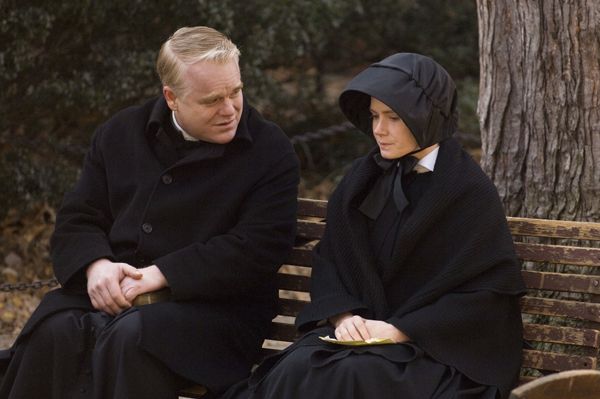
But the standout of the film has to be Phillip Seymour Hoffman, who has the difficult task of playing a totally ambiguous character. He has to straddle the line between guilt and innocence and he never tips his hand towards either, instead he plays the character in a way where every emotion could be seen as a confession or an absolution.

The film itself is almost like a mystery without a grand denoument. Which works in it's favor, because the film is so ambiguous as to what is and isn't happening, that it could have seriously hurt the film to go in one way or another. Plus, it allows for some great discussion, after seeing it last, my brother and my three cousins spent about an hour talking about out own theories as to what happened.

The film can be a bit heavy handed at times though, it constantly relies upon wind metaphors, with references made about the strengthening wind throughout the film, there is also a lot of dutch angles used in the film, which may turn some people off. It's also a very dialogue heavy movie, with no real action scenes which could turn some people off.

But if you enjoy smartly written, brilliantly acted films that can actually leave you discussing it for hours, you will love Doubt, like I did the first time, the second time, and the third time I watched it.

Oh, before you watch it, please keep in mind that you probably shouldn't take the last line of the film 100% literally. I know a few people who have stated that it ruined the movie because they didn't really look beyond what it could potentially mean, so please keep an open mind.

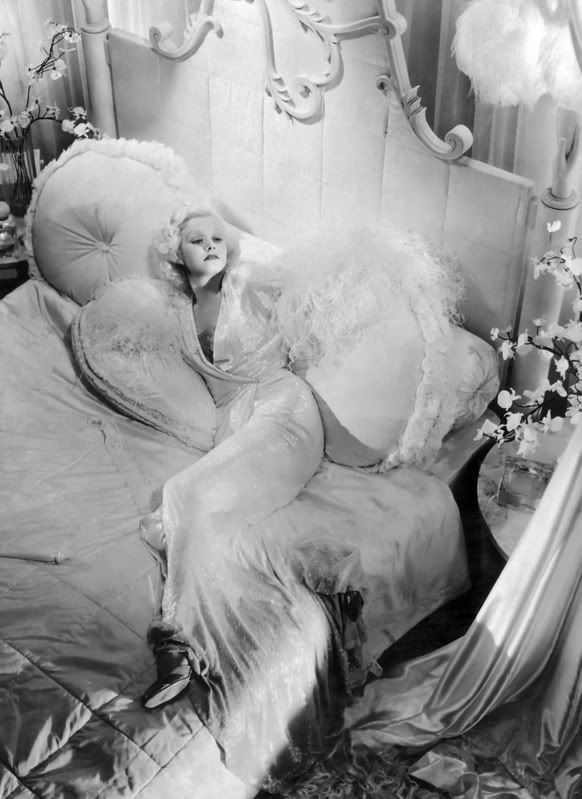
Friday, June 26, 2009

Dinner at Eight (1933)


An All-Star cast save this film which felt like only half of a movie.

Millicent Jordan (Billie Burke) is hosting a dinner party as part of a social coup, she has secured a wealthy British couple as her guests of honor. The film basically follows the story of her guests as they prepare for the big event. Some of the guests include Carlotta Vance (Marie Dressler), a washed up actress who is the former lover of Millicent's husband Oliver (Lionel Barrymore), Dan Packard (Wallace Beery) who is a mining tycoon who is planning on using dirty business dealings to take over Oliver's shipping company, there is also Kitty (Jean Harlow), Dan's brassy wife who is carrying on an affair with another dinner guest, Dr. Wayne Talbot. There is also Larry Renault (John Barrymore), another washed up actor who is having an affair with Millicent's engaged daughter.

The main problem with the film is that it focuses on all of the tangled relationships of the guests, but the film actually only shows the dinner party for about 10 minutes at the end. It feels like all build-up with no payoff, because we have people who are having affairs who are going to be attending with their spouses, but it doesn't really amount to anything.

Luckily, the cast is uniformly excellent, with Jean Harlow stealing the show as the brash and spoiled Kitty, but Billie Burke is also great as a woman obsessed with planning her dinner party, only for it to slowly fall apart around her. John Barrymore also deserves from credit for the most dramatic role in this comedy as a man who slowly begins to realize that he is not as important or talented as he thought he once was.

I don't know if it's actually the fault of the film or my own expectations that led to my main issue with this movie. If I hadn't expected the film to primarily focus on a disasterous dinner party (which most summaries will say about the film), I probably would have enjoyed it more than I do, but I was just anticipating all of these characters finally coming together and watching the sparks fly. But if you walk into the film without any such expectations then that in combination with the stellar cast make this a fun little film worth watching.

Friday, June 19, 2009

Whatever Happened to Baby Jane (1962)

Bette Davis and Joan Crawford are brought together for what should be considered the Holy Grail for fans of Classic Hollywood Catfights and B*tchery.

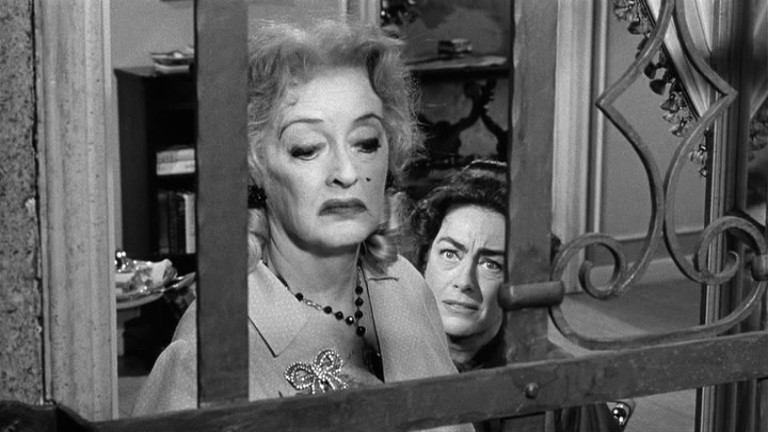
Bette Davis plays Baby Jane Hudson, a former child star who quickly lost her luster as she grew older. Unfortunately for her, her sister Blanche (Joan Crawford)'s career took off and she became a movie star. Unfortunately for Blanche, booze and jealousy combined in a car accident that left her in a wheelchair, leaving her in the care of her sister who begins to grow more and more unstable.

Let me get this out of the way and say that both leads are fantastic, but this really is Bette Davis' show. Blanche has to be the sympathetic character, so she remains much more one note than Jane, who gets to go from bitter alcoholic to going through a twisted second childhood. Davis hits all of the emotional beats perfectly in a role that could have easily been played to scenery-chewing camp, but Bette Davis gives Jane a sort of internal turmoil and humanity that could have otherwise been lacking.

In fact, the whole movie somewhat tricks you, it starts out as you would expect, with Jane mocking and abusing Blanche in a sort of dark-comedy, but it slowly fades away as Jane begins becoming more and more unstable and what we're left with is two wounded individuals who have hurt each other and have made some horrible mistakes.

The film is primarily about the two leads, with only two prominent secondary characters. Elvira (
Maidie Norman), the housekeeper who is Blanche's only ally in the house, and Edwin (Victor Buono), the pianist Jane hires to accompany her when she begins planning to resurrect her act. Buono actually received an Oscar nomination, but to be honest, I'm baffled by it. It's not that he does a horrible job, but his character is basically just a slimeball loser who lives with his mother.

This is a film that deserved to be seen. It's a very dark little movie, but you have two of classic cinema's biggest titans (who hated eachother) together in one film and delivering great performances. There's not really a whole lot to hate.

Monday, June 15, 2009

BUtterfield 8 (1960)

Elizabeth Taylor plays a hooker in a film that is for the most part, pretty bad.

Oh, and by the way, the BU in the title is correct, it's not a spelling mistake, so I don't want any complains (though at this point any sort of reaction by someone would be desired)

Liz plays Gloria a part-time model and part-time hooker who begins a relationship with the married Weston Ligget, a commoner who has married into money.

Let me say this right off the bat, the only redeeming quality of this film is Elizabeth Taylor's performance, other than that, the film is light on plot and the actual plot evokes no emotional connection. Weston is a total pig, and we are never really shown anything to their relationship beyond scenes of them in various places and hints that they're getting ready to have sex.

The biggest mistake of the film is featuring Weston's wife as predominantly as the film does, because she's made out to be incredibly sympathetic, blaming the affair on herself for being from a rich family, it makes it almost impossible to want Gloria and Weston to make it as a couple. The best way to execute a love triangle (at least to make it interesting) is one of two ways. Make all of the character likable, so we have some sort of emotional investment in who ends up with whom, or make one of the two women or men some horrible person so we can cheer the moment they are left in the dust. Unfortunately, we feel for both women, but we want them to dump Weston as soon as possible. He's a very whiny drunk who's biggest issue is the fact that his wife comes from money, big woo.

There's a minor subplot about Gloria's musician friend Steve (Eddie Fisher, Taylor's then husband) who might be in love with Gloria, but has a girlfriend. Frankly, the plot is very underdeveloped and only serves as a catalyst for Gloria to make a decision later in the film.

As I said earlier, the only reason to see this film is to see Elizabeth Taylor's incredible performance. She plays a woman that craves attention and feels shame for doing so, as well as being extremely vulnerable. There is one scene (the best scene in the whole movie) where Gloria explains how when she was 13, a friend of the family raped her for a week while her mother was out of town. And through tears, anger, and shame Gloria admits to loving it. The scene, which would already be shocking if seen today, showcases Taylor's talent as she allows for a combination of revulsion, fury, sorrow to play across her face.

It's a shame that her Oscar win for this film is so tainted by the opinion (which she also shares, in addition to hating this film) that she only won due to a serious illness at the time, which many thought would have killed her, because she really deserved to win. I'm not saying she's better than the other nominees (I don't even know who they are, besides Shirley Maclaine for The Apartment) but she certainly gave an Oscar-worthy performance, which is the only reason for seeing this film.

Oh, and don't get me started on the ending. It's absolutely horrible and completely out of left-field.

Friday, June 12, 2009

Marked Woman (1937)


Bette Davis is a hooker is sets out to destroy the mob. Really, do you need to hear anything else?

Ok, since this is a blog about movies, I suppose I should actually tell you something about the film. Bette Davis plays Mary Dwight, a "hostess" at a nightclub that has recently come under ownership of Johnny Vanning (Eduardo Ciannelli), a dangerous mob boss who has killed past "hostesses" for knowing too much. When one of her "clients" is murdered for paying his bill in bad checks, Mary is arrested and encouraged by D.A David Graham (Humphrey Bogart) to assist him in bringing Vanning down. Mary agrees, only to aid Vanning by presenting false evidence. However, Mary must turn to Graham when Vanning turns against her in an effort to bring Johnny to justice.

Bette Davis is pretty good in the title role. Granted, a tough girl is not exactly the hardest role for Davis to play, but she gives Mary some intelligence which at least adds some depth to the character. But there are some moments where she descends into melodrama, but at least in one scene it works, since it's supposed to be an act for the D.A.

Bogart is good in this film as well, despite his character being fairly shallow. He really only exists as a crusader out to destroy Vanning, and despite his character making claims of growing up in poor situations, we never get anything beyond. If the film would have gone a bit into his backstory, the character could have become more realized.

The rest of the cast is all serviceable. Since the film is mainly a vehicle for Davis, she gets most of the screentime and we don't really get anything from the other character to suggest any sort of well-roundedness. Though it's worth mentioning that Jane Bryan plays Betty, Mary's sister, and she has a very bizarre story arc. She is in town for a college football game and is under the idea that Mary is a model in a dress shop, but once she finds out about Mary's whoring, she suddenly decides to drop out of college and become a party girl. It's very odd and hardly believable, but it moves along the plot so we have to take it as is.

The actual plot of the film is a bit predictable, and we can guess all of the major plot points before they happen, but as with most films, the performances are what makes the film interesting and the two leads of Davis and Bogart are good enough to make this film easy to watch (it's also fairly short, only around 90 minutes)

Thursday, June 11, 2009

Jezebel (1938)


I apologize for doing another Bette Davis movie, but I actually rewatched this film last night and figured I should go ahead and do an entry on it, since it is a Bette Davis movie.

Bette Davis is Julie, a spoiled New Orleans woman who is engaged (again) to banker Preston Dillard (Henry Fonda). Their relationship has been marked by a series of petty quarrels, usually initiated by Julie in an attempt to make him jealous or simply to f*ck with him. This time, since Pres was at an important bank meeting and unable to go to her dress fitting, Julie decides to dress up as a whore to the Olympus Ball which basically gives everyone the vapors, most of all Pres who ends up breaking his engagement with Julie, who is convinced that Pres will return to her.

A year passes and Pres has moved to the North on bank duty, but is forced to return when Yellow Fever begins infecting the townspeople. Julie throws a party at the family's plantation only to get a shock when Pres shows up with his wife on his arm, a Yankee named Amy.

The plot isn't terrible surprising. The moment we hear that Pres is coming back and Julie's freaking out, we know that he's going to be married or engaged or in some other state to complicate things. But the film does have Bette Davis.

This is the performance that landed Bette her 2nd Oscar (though I think her two wins should have been for different movies), and it's a great performance. She plays Julie as very spoiled, petty, but strong-willed. She may be a spiteful young lady, but we get the sense that there is some strength within her. She also to make great highs and lows in the film, committing horrible acts as well as being self-sacrificing, and she pulls it off believably.

Fay Bainter (who also won an Oscar) plays Aunt Belle (apparently she is both Julie and Pres' aunt, which is messed up), and she really brings the necessary heart to a film about a mean-spirited southern belle. And special attention should be made to Margaret Lindsay who plays Pres' new wife Amy. She has to serve almost as the Anti-Julie in the film. She is low-key, thoughtful, but like Julie she is strong-willed woman and she really makes you feel sorry for her despite her character being relatively minor.

The rest of the cast is decent. Henry Fonda is passable, Pres is such a wishy-washy character that it's hard to get him any sort of real strength, he basically lets Julie screw with him over and over and only puts his foot down 1 or 2 times. George Brent is also decent as Buck, a former flame of Julie's who still loves her. But I've seen Brent in several movies and he's really not that great of an actor.

The sets, costumes and directions are all outstanding (it's terribly unfortunate that the film is black and white) and with the addition of the strong performance by Bette Davis, Fay Bainter and Margaret Lindsay, it makes this film one that is easy to recommend, especially if you love Gone with the Wind and you enjoy seeing b*tchy Southern women ruin other peoples lives.

Tuesday, June 9, 2009

A Woman's Face 1941

s
A disfigured Joan Crawford, planned child murder, weird accents and Ma Kettle comes together in this flashback-filled film that contains Joan Crawford's best performance (that I've seen anyway).

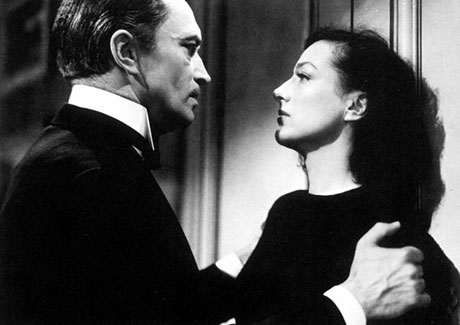
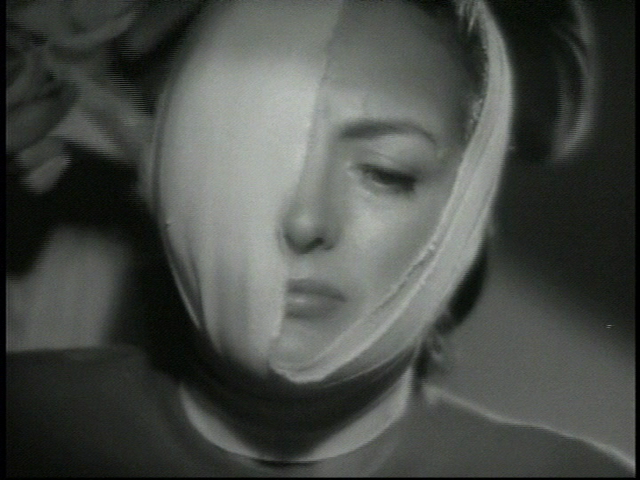
Anyway, Joan Crawford is Anna Holm, who had the side of her face disfigured in a childhood fire that took her family. Suffering a life of mockery and abuse, Anna becomes a cold-hearted blackmailer. She meets a plastic surgeon who is able to fix her disfigurement, but she is tempted to go back down a the dark path when the man she is in love with concocts a scheme to murder his four year old nephew that is currently set to inherit his family's fortune.

The film is presented in a series of flashbacks during a murder trial in which Anna is the accused. It allows for the film to unfold almost like a mystery as it plays with our expectations and goes into all sorts of directions.

As I said, the film is the best Joan Crawford performances that I've seen. She has to play such a nuanced character, someone who has suffered a very hard life, but begins to let herself love and grow, and she pulls it off believably.

Unfortunately, the film falls into some predictable territory once the 4 year old nephew (Richard Nichols, who was also in Kitty Foyle and the Bette Davis film All This, and Heaven Too) enters the picture. The kid is overtly cutsey and "golly gee whiz, I love ya" and you begin to get an idea where Anna story arc is going to go. In addition, the other characters are not nearly as interesting as Anna. The plastic surgeon, Dr. Gustaf (Melvyn Douglas) is a fairly boring character who oddly offers to fix Anna's face in the middle of a break-in, and Anna's love, the sinister Torsten (Conrad Veidt) has a rather peculiar and unbelievable character arc where he descends into homicidal madness.

But the film is worth seeing alone for Joan Crawford's performance, because it really does showcase her talent for playing a variety of characters, having to be both cold-hearted and spiteful as well as vulnerable and maternal.